



Release notes
hila v4.3-r1 release notes
New features in hila v4.3-r1
-
Explanations
hila now provides detailed explanations of how it arrived at its answers, helping users and admins understand the reasoning behind the results. This also helps troubleshoot issues that might arise.
See hila Explanation and reasoning for more information.
hila v4.2-r3 release notes
New features in hila v4.2-r3
-
Support single-digit precision
You can now set the decimal precision to a single digit.
See Set decimal precision for more information.
-
Single Sign-On (SSO)
hila now supports Single Sign-On (SSO) for any provider, with skeleton configurations provided for Google, Azure, Okta, and Auth0.
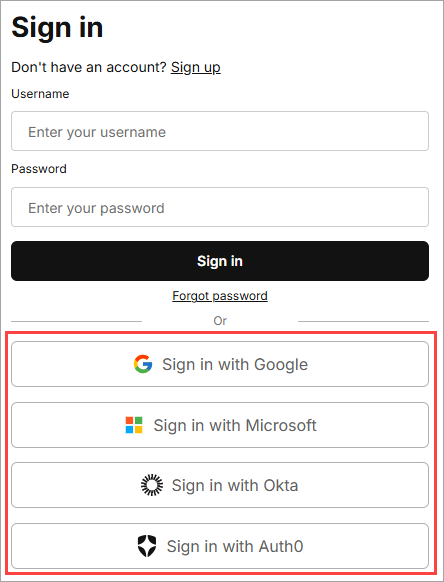
See Configure Single Sign-On (SSO) for more information.
hila v4.2-r2 release notes
New features in hila v4.2-r2
-
Transpose table
Transpose table allow you to switch the rows and columns of a table, making it easier to analyze data from different perspectives.
See Transpose table.
-
Pivot table data
Pivot tables allow you to summarize and analyze data in a table by grouping and aggregating values based on selected dimensions. This is useful for identifying trends and patterns in your data.
See Pivot table data.
-
Entity mapping
Note: Entity matching looks at exact character sequences (e.g., flavor → FL, FLA). However, similar meaning words are not matched (e.g. flavor vs flavorful).
-
Deep analysis mode
Deep analysis mode allows you to ask questions that require more complex reasoning and analysis. This mode is useful for advanced users who want to perform in-depth analysis on their data.
To enable deep analysis mode, click the Analysis toggle in the conversation pane.
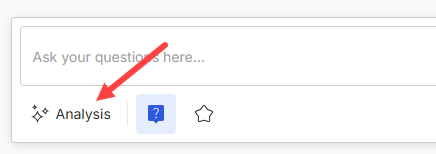
See Deep analysis mode for more information.
-
Balance sheet analysis
hila now supports balance sheet analysis, allowing you to ask questions about your company’s assets, liabilities, and equity. This is useful for understanding the financial health of your organization.
See Balance sheet analysis for more information.
Known problems for hila v4.2-r2
- Deep analysis works only on metadata that has company info defined.